Stories
Always up to date. Always informed
Gondwanaland at Leipzig Zoo
Pygmy hippopotamuses in Gondwanaland at Leipzig Zoo walk on Liquid Rubber from Gröne.
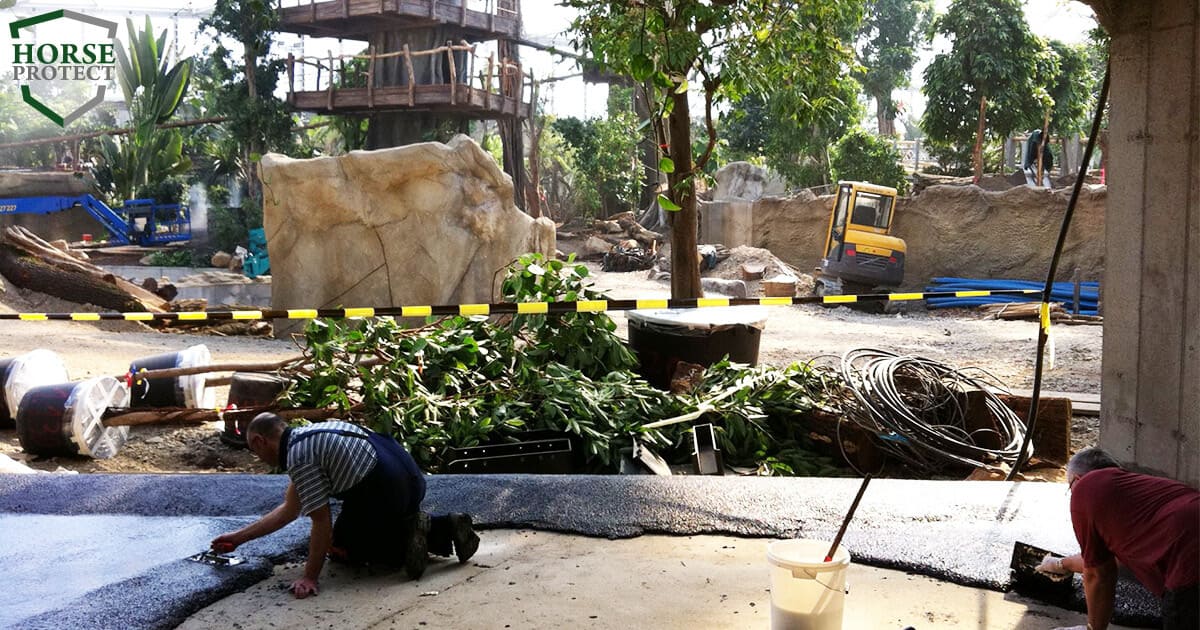
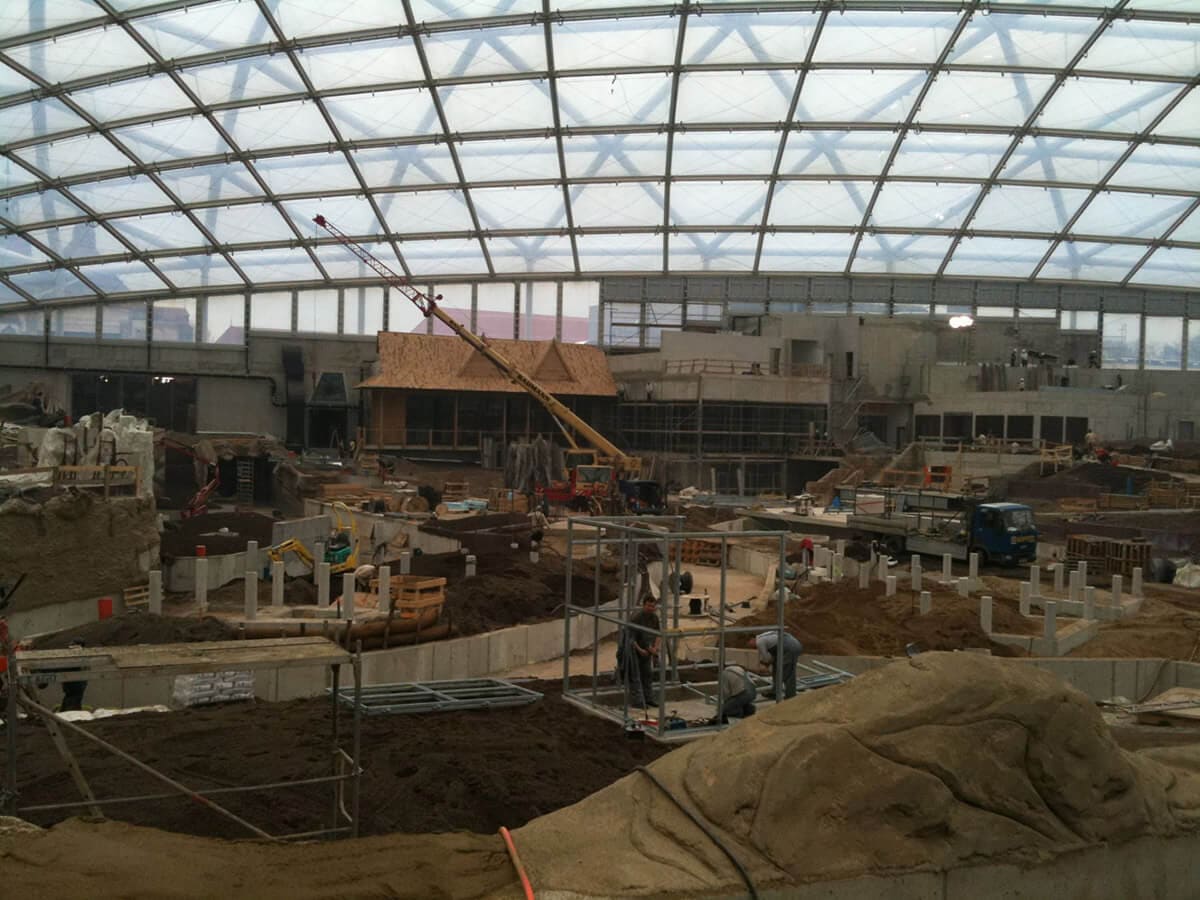
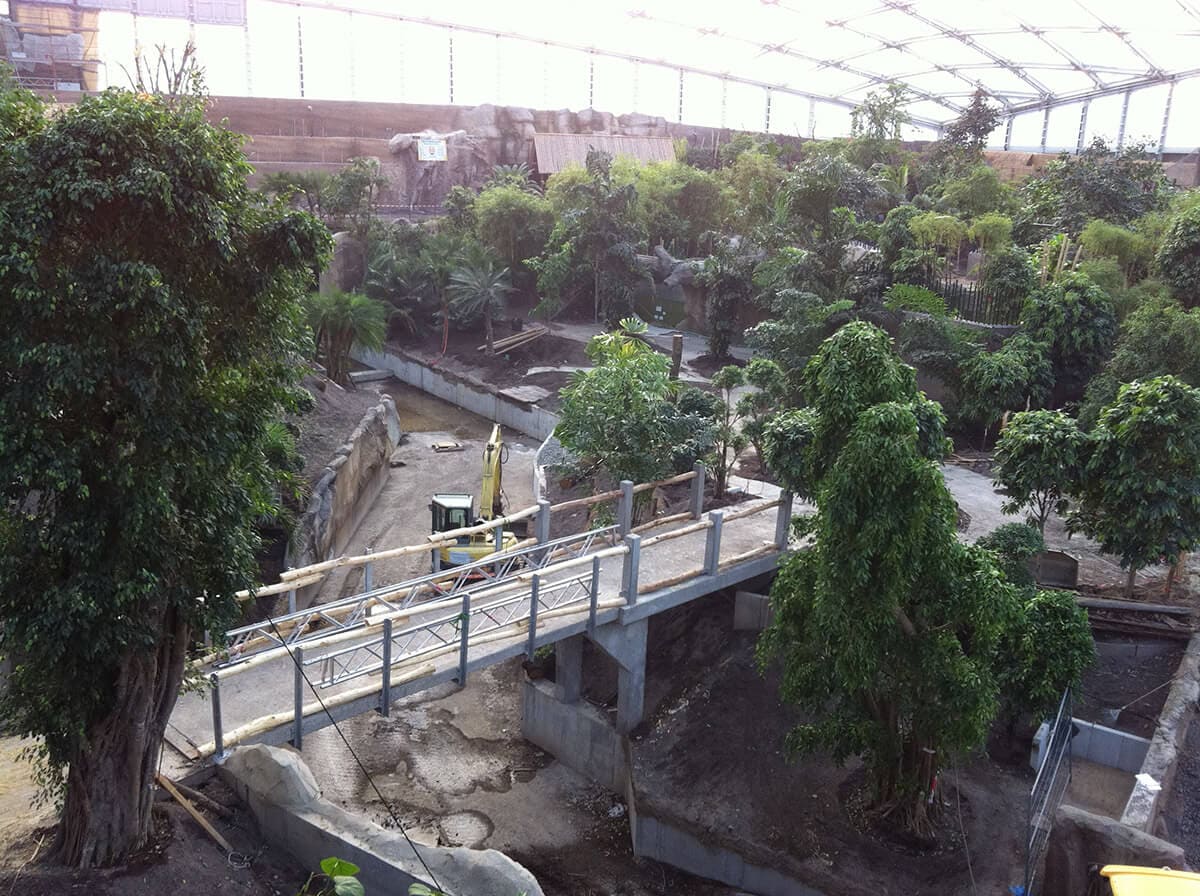
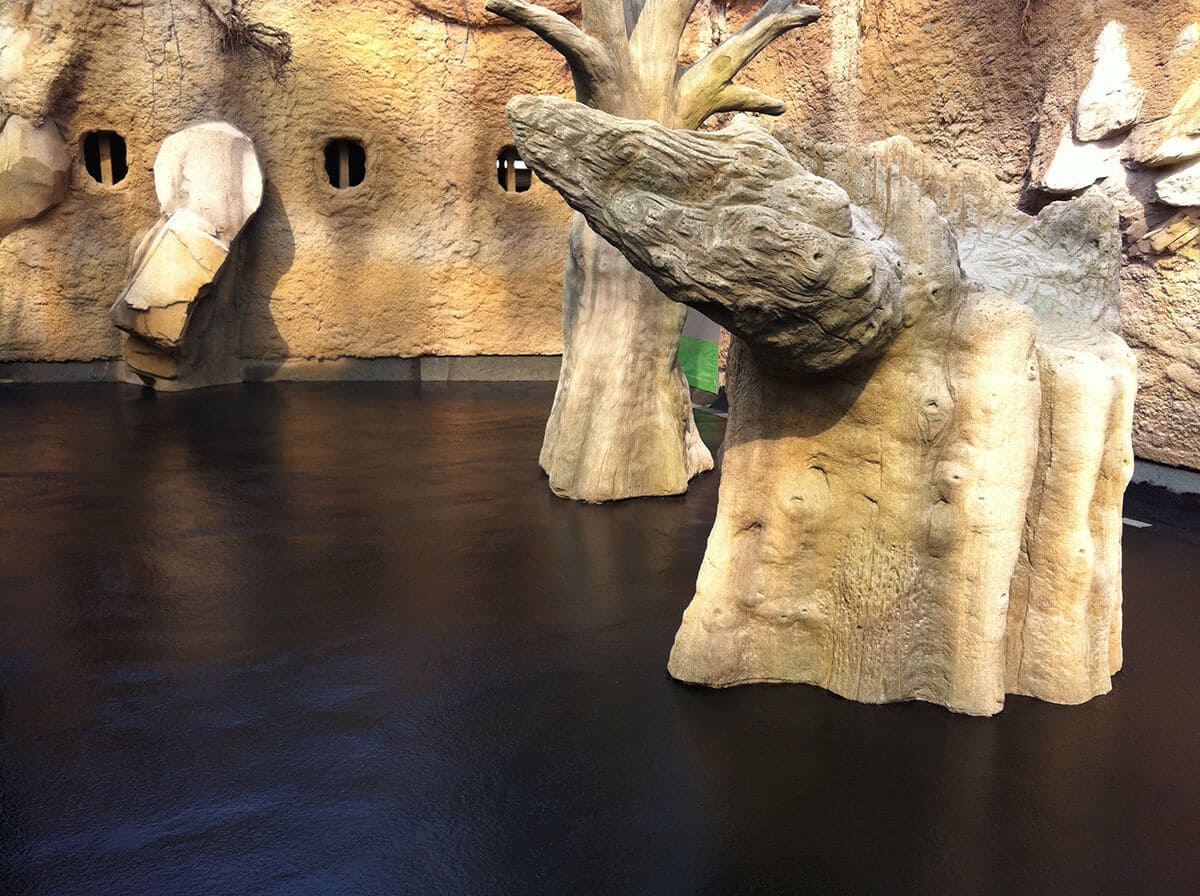
Covering an area of almost three football pitches and with its huge air cushion roof, the futuristic tropical hall lies at the heart of Leipzig Zoo. Around 500 species of tropical plants and 140 different animal species have found their tropical home here. One of these is the Malayan tapir, another is the pygmy hippopotamus. What they both have in common is that they walk on Liquid Rubber from Gröne in Dinklage. The special flooring made of natural latex was installed on terraces and in pools and stables when Gondwanaland was built in 2011. Since then, the rubber screed has been providing the animals with an ideal surface over a total area of 500 square metres.
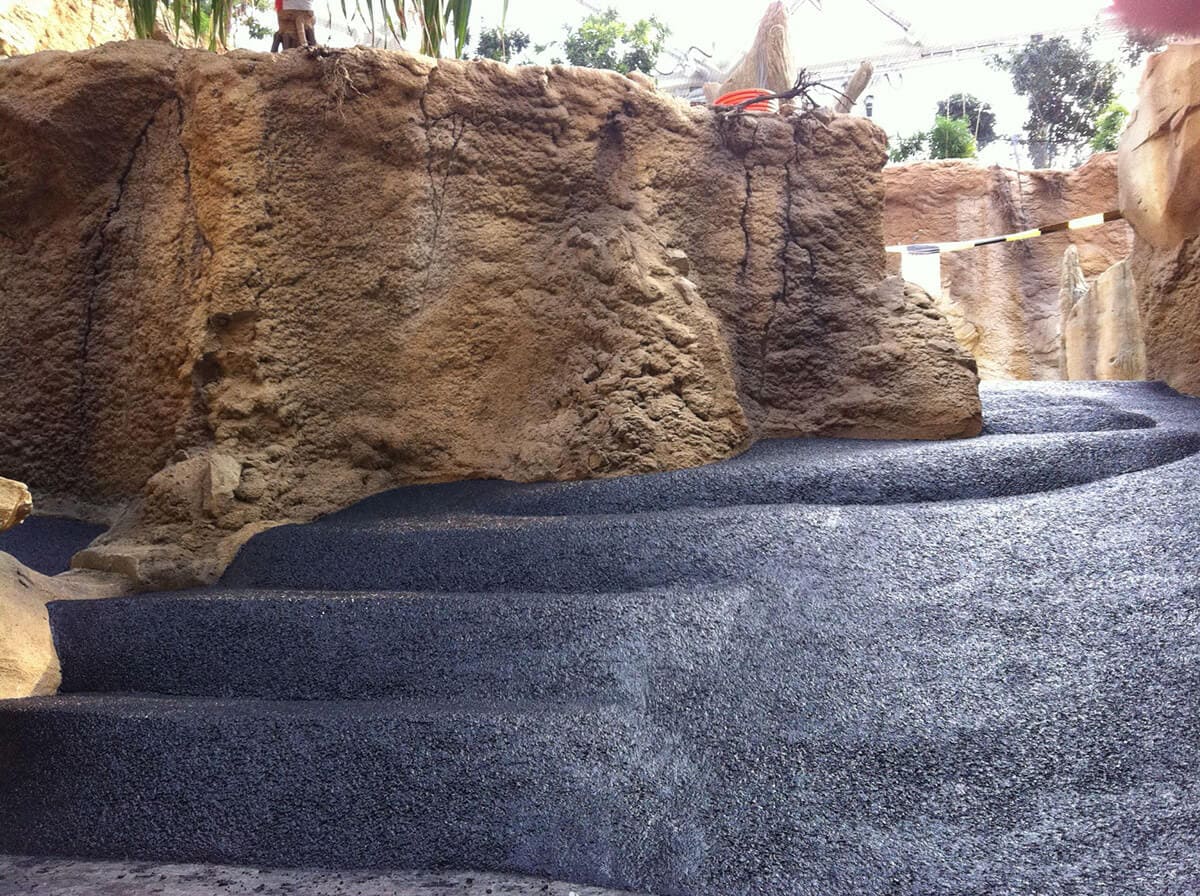
Many of Liquid Rubber's positive characteristics set global standards The slip-resistant, animal-friendly flooring system is joint-friendly and completely watertight, because the capillary effect stops after just a few millimetres. The rubber screed therefore seals the entire surface – seamlessly, durably and sustainably. It is also 100 percent repairable and fully load-bearing again after just 48 hours. With this variety of positive characteristics, Liquid Rubber sets global standards for high-quality special flooring made from liquid rubber. Innumerable German zoos and animal parks in Hanover, Munich, Berlin and Münster rely on it, as do international zoological gardens in Tallinn, Ljubljana, Dubai and Malibu, amongst others.
Rubber screed can be installed on virtually any surface
Besides its high flexibility, another major advantage is that the rubber screed can be installed on practically any new or old surface in need of renovation. To do this, floors consisting of wood, stone or concrete only need to be cleaned properly with a steam cleaner. Undoubtedly, it is even easier if the liquid rubber flooring system can be installed directly on the newly produced surface, as in the case of Gondwanaland at Leipzig Zoo.
The thickness of the Liquid Rubber is oriented to individual requirements
The thickness of the Liquid Rubber is oriented to the individual requirements and, of course, the weight of the animals. In the vast majority of zoos, natural latex flooring is installed in a thickness of 20 to 50 millimetres, thereby forming an adequate adhesive bridge between the subsurface and the animal. Only an elephant enclosure or rhinoceroses might need thicknesses of up to 70 millimetres to cope with the enormous forces that act on the floor, particularly when the fully grown pachyderms turn around.Liquid Rubber has established itself as the ideal flooring in Gondwanaland
Back to Gondwanaland – incidentally, its name is derived from the southern supercontinent Gondwana, which once combined large parts of our planet's land masses. Leipzig's pygmy hippopotamuses have found a new habitat in their Gondwanaland. While the "mini" cloven hooved animals are significantly smaller than hippopotamuses (Latin: Hippopotamus amphibius), fully grown animals nevertheless weigh around 180 to 270 kilogrammes. The strain on their joints is correspondingly high. And the flooring on which they walk should accordingly be of high quality. Liquid Rubber has become established as the ideal solution for this.